Why Does My Dog Follow Me Everywhere? 4 Reasons Behind Your Shadow
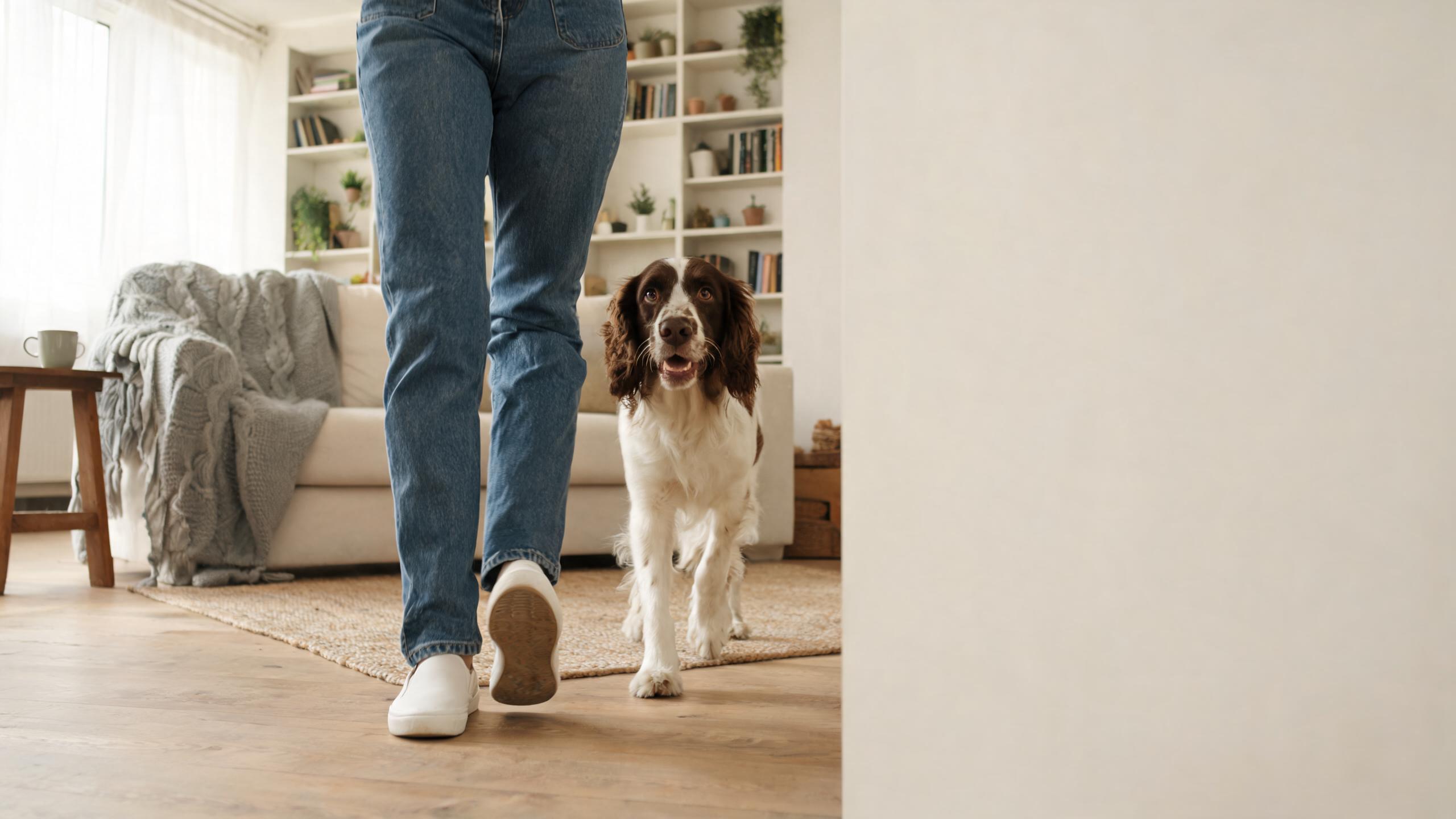
If your dog trails you from room to room, there is usually a simple reason behind it. Here are the four most common explanations — and when a little independence is worth encouraging.
There is a particular kind of dog owner who has not been to the bathroom alone in years. If your dog gets up the moment you do, pads after you into the kitchen, and settles by your feet only to repeat the whole performance when you move again, you have what many people affectionately call a "velcro dog". It is one of the most common things owners ask about, and the good news is that it is usually a sign of a happy, well-bonded dog rather than a problem. Still, it helps to understand what is driving it.
1. They are hardwired to stick with their group
Dogs are social animals descended from ancestors who lived, hunted and rested together. Staying close to the group was simply how you stayed safe and fed. Thousands of years of living alongside us has only strengthened that instinct — and pointed it squarely at you. When your dog follows you, a lot of the time they are simply doing what feels natural: keeping their family in sight.
Some breeds lean into this more than others. Dogs bred to work closely with people — many herding and companion breeds — are especially prone to shadowing, because attentiveness to their human was the whole point of the job.
2. You are the source of everything good
From your dog's point of view, you are a walking dispenser of meals, walks, cuddles, games and the occasional dropped piece of toast. Following you keeps them close to the action. If being near you has reliably led to nice things, your dog has learned — quite sensibly — that the best place to be is wherever you are.
This is worth keeping in mind, because we often reinforce the behaviour without realising. A pat or a treat handed over the moment they appear at your side teaches them that trailing you pays off.
3. Boredom and a need for something to do
A dog with not much else going on will often make following you their main hobby. If walks are short, the day is long and there is little to chew, sniff or solve, you become the most interesting thing in the house by default. In these cases the shadowing tends to come with other restless signs: pacing, pestering for attention, or finding their own entertainment in your shoes.
4. Anxiety, age or simply needing reassurance
Sometimes the constant company is about comfort. Dogs who are noise-sensitive, newly rehomed, unwell, or getting older can become clingier because being near you feels safe. A previously independent dog who suddenly becomes a shadow is worth paying attention to — a change in behaviour can occasionally point to discomfort or anxiety, so it is worth a chat with your vet to rule anything out.
When following tips into a worry
Gentle shadowing is nothing to fret about. The thing to watch for is distress when you are not there. If your dog panics when left alone — barking, howling, pacing, destruction or toileting indoors — that points towards separation-related anxiety, which is a genuine welfare issue rather than simple devotion. If that sounds familiar, speak to your vet or a qualified behaviourist, who can help you build a proper plan.
Helping a clingy dog feel secure
You do not need to push your dog away to encourage a little healthy independence. A few simple things help:
- Reward settling, not just shadowing. Quietly praise your dog when they choose to relax on their bed, so calm gets the attention.
- Give them a job. Puzzle feeders, snuffle mats and chews give the brain something to do that is not you.
- Practise tiny absences. Step out of the room for a few seconds and return calmly, building up gradually so being apart feels unremarkable.
- Keep arrivals and departures low-key. Big emotional hellos and goodbyes make your comings and goings feel like a bigger deal than they need to.
- Make sure exercise and enrichment are genuinely meeting their needs. A tired, satisfied dog is a more settled one.
Supporting a calm, settled dog from the inside
Behaviour and bonding are mostly about routine, training and meeting your dog's needs — but general wellbeing plays a supporting role too. A balanced diet that includes omega-3 fatty acids provides nutritional support for brain and nervous-system health as part of an overall healthy lifestyle. It is not a quick fix for behaviour, and any sudden change in how your dog acts should always be checked with your vet first.
If you would like to support your dog's everyday wellbeing from the inside, PetJesty's Vegan Omega 3, 6 and 9 Algae Oil is a clean, mercury-free source of the DHA that supports brain and heart health — with no fishy smell, so it is easy to add to dinner. Pair it with plenty of attention, enrichment and a predictable routine, and your devoted shadow will be all the happier for it.