Hot Spots on Dogs: What They Are and How to Soothe Them
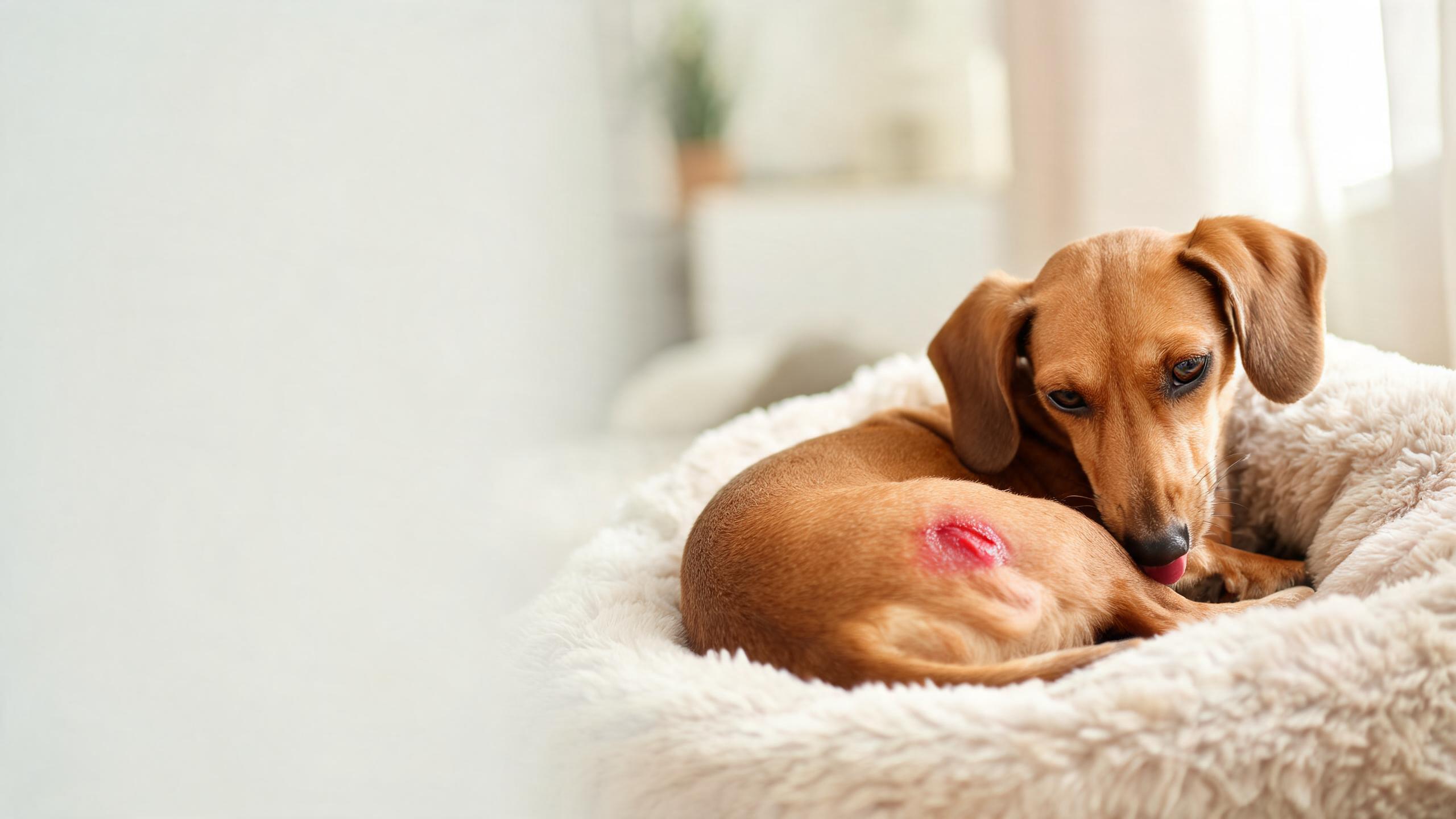
Hot spots can appear out of nowhere and spread fast. Here is what causes these angry, weepy patches, how vets treat them, and how to lower the odds of them coming back.
One day your dog has a perfectly normal coat. The next, there is a red, wet, angry patch of skin that seems to have appeared overnight — and your dog cannot leave it alone. That is a hot spot, and if you have met one before, you will not forget it.
What exactly is a hot spot?
A hot spot (your vet may call it acute moist dermatitis) is a localised area of inflamed, infected skin. It usually starts with something that makes the skin itch or hurt — then the dog licks, chews and scratches at it, which damages the skin further and lets bacteria take hold. Within hours it can become a raw, weepy, painful patch that grows alarmingly quickly. They are most common in warm, humid weather and in thick-coated breeds, where moisture gets trapped against the skin.
What triggers them
Hot spots are almost always a reaction to an underlying irritation. Common starting points include:
- Flea bites and flea allergy — a single bite is enough for some dogs.
- Allergies — environmental or food.
- Trapped moisture — after swimming, baths or rain, especially under a dense coat.
- Matted fur that holds damp and dirt against the skin.
- Ear or anal gland problems that make a dog chew at a particular area.
- Boredom or stress licking.
What to do if you spot one
Hot spots can spiral quickly, so this is one to act on:
- Do not let your dog keep at it. Continued licking and chewing is what turns a small patch into a large one. A recovery collar (the cone) often helps in the short term.
- Gently clip and clean the area if you can do so without distressing your dog — airflow helps it dry and heal. If the patch is large, painful or spreading, leave this to your vet.
- See your vet. This is the important one. Hot spots usually need proper cleaning and, often, medication to settle the infection and the inflammation. Your vet will also want to work out what set it off, because an untreated trigger means it will simply come back.
Resist the urge to reach for human creams or home remedies — many are not safe for dogs to lick, and the wrong product can make things worse.
Lowering the odds of a repeat
Because hot spots are a symptom of an underlying itch, prevention is really about managing that itch and keeping the skin healthy:
- Stay consistent with flea prevention all year.
- Dry your dog thoroughly after swims, baths and wet walks, paying attention to dense or feathered areas.
- Groom regularly to prevent mats and keep air moving through the coat.
- Address allergies with your vet rather than firefighting each flare.
- Support the skin barrier from within with a skin-friendly diet.
Where nutrition fits
You cannot feed your way out of an active hot spot — that needs your vet. But a healthier skin barrier is less prone to the itch-scratch-damage cycle that hot spots depend on. Omega-3 fatty acids (DHA and EPA) support skin barrier function and bring a naturally calming, anti-inflammatory quality, which is why they feature so heavily in skin-and-coat care. A well-nourished coat that sheds and dries well also traps less of the moisture hot spots love.
The bottom line
Treat a hot spot as a "ring the vet" event, not a wait-and-see one — they move fast and they hurt. Then turn your attention to the trigger and to keeping the skin in good condition so the next one never gets started.
For ongoing skin and coat support, PetJesty's Vegan Omega 3, 6 and 9 Algae Oil provides clean, mercury-free DHA to help maintain a healthy skin barrier — a sensible part of a long-term plan once your vet has the immediate flare under control. When in doubt about an angry patch of skin, your vet comes first.